Pascal McGilvray-Guard recorded ADR with Gillian Zinzer for a new film, Holy New York.
Pictured below (from left to right) is our engineer, Pascal, producer, Ebony Tay, actor Gillian Zinser, and director, Sonya Goddy.
Pascal McGilvray-Guard recorded ADR with Gillian Zinzer for a new film, Holy New York.
Pictured below (from left to right) is our engineer, Pascal, producer, Ebony Tay, actor Gillian Zinser, and director, Sonya Goddy.
Two years ago, Dubway began recording for Butterbean's Cafe. We are proud to announce that the show has officially begun airing on Nick Jr.! Congratulations to everyone involved for the debut of its first episode on the air.
Butterbean's Cafe is an animated preschool fantasy television series created by Jonny Belt and Robert Scull, the creators of hit kid's show Bubble Guppies, and produced by Allie Strawbridge. The series follows Butterbean, a fairy who runs a neighborhood café with her friends, and involves "creative cooking, a farm-to-table philosophy, and a social-emotional curriculum that focuses on leadership skills."
Dubway Studios has served as the home for all VO recording for the new series, which boasts voice appearances from prominent actors including Nancy Giles and Alysia Reiner.
We had the pleasure of doing audio post for Jake Tracy’s new film, Snowflake. Louis Fisher took on the role of sound supervisor and re-record mixer. Keenan Dubois and Pascal McGilvray edited the dialogue, and Burgess Carlton cut ambient sound effects!
Snowflake is a chilling commentary on the contemporary political climate of the U.S.
Check out the teaser trailer below!
Over the last few months, our engineer, Louis Fisher has been recording voiceover for Nick Jr.’s new show, Butterbean’s Café! This new show is produced by the same team that brought you Bubble Guppies: Johnny Belt an Robert Scull.
The show is available online now, and is set to air on Nickelodeon on November 12th!
Image via amazon.com
Sam Palumbo recorded episode seven a new podcast called “Let’s talk about cats,” which is set to premier on November 13th!
The podcast is hosted by Mary Phillip-Sandy. This episode featured special guest, Sachi Ezura, who is known for her work in Girl Code, The Rundown with Robin Thede, and Seriously.TV.
Check out the trailer for this new podcast here!
Produced by Oscar and Emmy award winning Alex Gibney, Enhanced explores the vanguard of sports medicine.
The sessions were engineered by Zac Suskevich, and Louis Fisher.
This six-part documentary aired on ESPN+ and the trailer can be found on the ESPN website.
Photo via Jigsaw Productions
We regularly record Fast Company’s Creative Conversation podcast. Recently, we recorded an interview with Scary Movie star, Regina Hall.
Fast Company’s article, and links to the episode can be found here.
Pictured below is our engineer, Louis Fischer, Regina, and KC Ifeanyi.
This is our very first in-house podcast here at Dubway. “A Podcast You Can’t Sweat Out” is a mid-2000’s, Myspace-nostalgia driven podcast, where quintessential Emo and Post-Hardcore records are reviewed under a retrospective lens.
The first stop on this wild ride, is an album called “Three Cheers for Sweet Revenge” by My Chemical Romance. This episode is available here.
The podcast is written, produced and recorded by our engineer, Zac Suskevich, and our studio manager, Nicole Muzii.
"PIPELINE" is an off-broadway play that ran throughout the summer of 2017 at the Lincoln Center. It is now going to be released in cinematic format nationwide this October!
"PIPELINE" is the brain child of writer, Dominique Morisseau, who is not only a renowned playwright, but also a writer/co-producer for Showtime's hit series, "Shameless." The play was directed by Lileana Blain-Cruz, and cast with the likes of Tasha Lawrence, Morocco Omari, Karen Pittman, Namir Smallwood, Jamie Lincoln Smith, and Heather Velazquez.
Dubway had the pleasure of doing audio post-production for the film. Our engineer, Louis Fisher, was the dialogue editor, and Nathaniel Reichman was the re-record mixer.
Find out where and when you can see the film here, and in the mean time, take a look at the trailer below!
Image via Simon & Schuster
Zac Suskevich recorded an audiobook for #1 New York Times bestselling author, Karen Kingsbury. The production was directed and produced by Grammy-nominated, Travis Tonn, and voiced by January LaVoy. January was named "Audiobook Narrator of the Year" by Publishers Weekly in 2013. She is also a renowned actress in theater, television, and prime-time TV.
The Book, "When We Were Young," is set to be released on October 16th, 2018.
We had the pleasure of hosting an interview with Orange Is the New Black star, Dascha Polanco recently! Dasha was here in Manhattan, while the interviewee was located in LA, so our engineer, Louis Fisher, facilitated their conversation via Source Connect.
Orange Is the New Black is a hit Netflix series that first aired in 2013, and is currently on its fifth season. The show has won four Emmy Awards, among several other prestigious accolades.
28 Likes, 3 Comments - Dubway Studios (@dubwaystudios) on Instagram: "Louis had a great session yesterday with Dasha Polanco!"
We had the opportunity to do post audio on a new documentary called "A Taco Told in Texas" by David Gorvy. The short film premiered at the Anthology Film Archives recently, and will surely hit some screens at upcoming festivals.
Keenan Dubois edited the dialogue to sound nice and smooth, while Louis Fisher and Zac Suskevich mixed it to perfection.
Check out the trailer below!
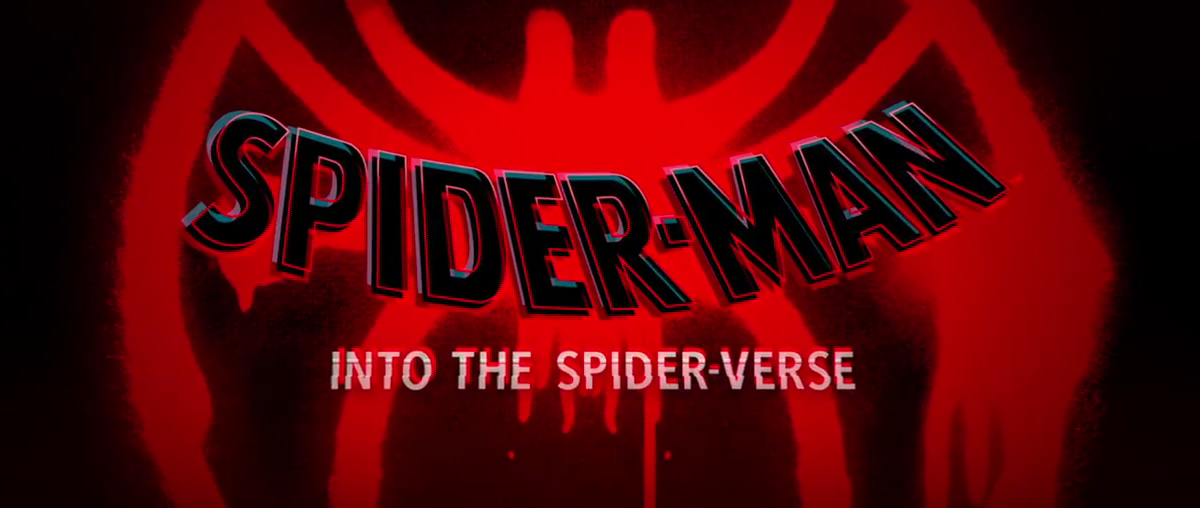
Last Tuesday, actor Liev Schreiber was in studio recording voice-overs for his new super-villain role, in a project related to the highly anticipated animated film, Spider-Man: Into the Spider-Verse. We can't wait to see this one!
Spider-Man: Into the Spider-Verse, set to release in theaters this Christmas 2018, is an upcoming American computer-animated superhero film based on the Marvel Comics character Miles Morales/Spider-Man, produced by Columbia Pictures and Sony Pictures Animation. The film is directed by Bob Persichetti, Peter Ramsey, and Rodney Rothman, from a screenplay by Phil Lord.
Liev Schreiber is an American actor best known for his roles in several mainstream films, including the Scream trilogy, X-Men Origins: Wolverine, The Omen, and Spotlight. Schreiber has also had recent success in television, portraying the main protagonist of Showtime's Ray Donovan. Most recently, Schreiber appeared as a voice actor in Wes Anderson's Isle of Dogs.
Dubway engineer Louis Fisher recently recorded English voice-overs for Raise the Umbrellas, a documentary by Evans Chan, examining Hong Kong's democracy movement. The picture, originally released in 2016, was originally spoken in the Cantonese language.
Raise the Umbrellas explores the origin and impact of Hong Kong’s 2014 Umbrella Movement through the inter-generational lenses of three post-Tiananmen democratic activists – Martin Lee, founder of the Hong Kong Democratic party; Benny Tai, Occupy Central initiator; and Joshua Wong, the sprightly student leader. Comprehensive and intimate, driven by stirring on-site footage in a major Asian metropolis riven by protest, Umbrellas reveals the Movement’s eco-awareness, gay activism, and burgeoning localism.
Real World Playbook
We've had the pleasure of working with Real World Playbook to record voice-over material for their online course.
Real World Playbook, founded in 2016 by lawyer and Princeton graduate Genevieve Ryan, is an online resource to help recent college graduates and twenty-somethings acclimate to the real world. Their millennial-centric educational programming, tools, and resources help recent graduates thrive throughout the real world transition and beyond, covering areas in finance, health, living, work, and government.
Branded as "the GPS for Adulthood," RWP's innovative online course, 'Real World Ready,' uses millennial-centric videos and quizzes to help college seniors seamlessly transition into life after graduation.
We love what these folks are doing! Explore Real World Playbook online via their website: www.realworldplaybook.com
Below is a guest blog, written by Rhumba's outreach director, Erica Rabner.
Last week I hung out with Nathaniel Reichman (Supervising Producer – Re-recording Mixer at Rhumba and Dubway) and John Bowen (Sound Supervisor | ADR Supervisor | Music Editor) to talk binaural audio and other buzzwords I’ve been hearing around the studio. I learned about the important role immersive audio plays in storytelling. Nat and John told stories and unpacked techniques and processes behind kids shows and podcasts that help immerse kids in the story.
JB: 3D Audio approximates what you hear in real life. When something is behind you, you hear it slightly differently than when it’s in front of you. Binaural is a type of 3D audio that uses only 2 channels (one for each ear), and it’s been around for more than a century. It was never very popular, because recording required specialized equipment that was cumbersome and limiting. What’s new about what we've been doing, is we’re finally able to create a binaural effect using computer processing.
NR: Kids should be encouraged to close their eyes, and answer, “can you hear my voice above you, below you, in front?” “Why does it sound different when something’s in front/behind? Think about that...” Not only are kids learning the nuances of binaural recording, but this exercise serves as a great way to explore one of the most important senses: hearing!
“a mold of a human head outfitted with microphones — to create a 3-D listening experience that feels unlike anything children can read or watch” (Hess, 2017)
JB: Dolby Atmos has modeled what the head hears for any point in the 3D area of your head so that you don’t have to record with a head to get the effect that something is around you or behind you. There are lots of different models to account for differences in the way people’s ears work, size of head, etc.
NR: When we hear something, we hear it with two ears but the shape of your face and mask of your head creates a filter. HRTF, Head Related Transfer Function, considers how your head affects sound when it arrives at your ears.
DUMMY: When recording with a dummy head, you have to position your actors precisely where you want them in 3D space, and once recorded, you can’t change that in post. “You need to choreograph the scene around the head which takes a tremendous amount of pre-production.” – JB “If you’re recording with a dummy head, you can’t do pick-ups. If the actor is standing in a slightly different spot, the sound will jump around your head in an unpleasant way.” – NR
DOLBY: With synthetic/binaural software, everything can be done in post-production. You can take a normal mono recording and place it anywhere around someone’s head. You can move it in 3D space and manipulate the spatial quality.
NR: Binaural helps tell a story better. You’re given context on the screen i.e. if two people are talking in a gym, you see them there and your mind expects you to hear them there. These are more than fancy tools to play with -- in an audio only experience, it’s critical to have these tools to make the story compelling.
JB: Virtual reality increases your empathy with the story being told; the same is true with 3D audio in an audio-only program. When it seems more realistic, you feel more invested in what the characters are feeling.

“When it seems more realistic, you feel more invested in what the characters are feeling.”
JB: We’re in an experimental phase – anything goes right now – which is extremely exciting.
NR: We’re developing a new language now. When reality TV was starting out, they hadn’t developed their visual language, so it was hard to watch. Along the way, they found ways to show things they were having trouble with. Once a new language was developed, things started making sense.
NR: 3D audio tools help us to compensate for all the information you’re not getting when there’s nothing to look at. You can make a pretty good story with standard stereo, but if you want it to be great, you’ll want to use binaural/3D audio. There’s that old joke that TV without picture is radio, but TV without sound is broken.
JB: In a podcast, you know you’re going it alone with audio, so you approach cutting and storytelling in a way that will work completely on its own. The sound is the only thing that's telling the story. In TV and movies, the dialogue is generally the most important part of the sound because you know the picture can do much of the heavy lifting in other storytelling areas.
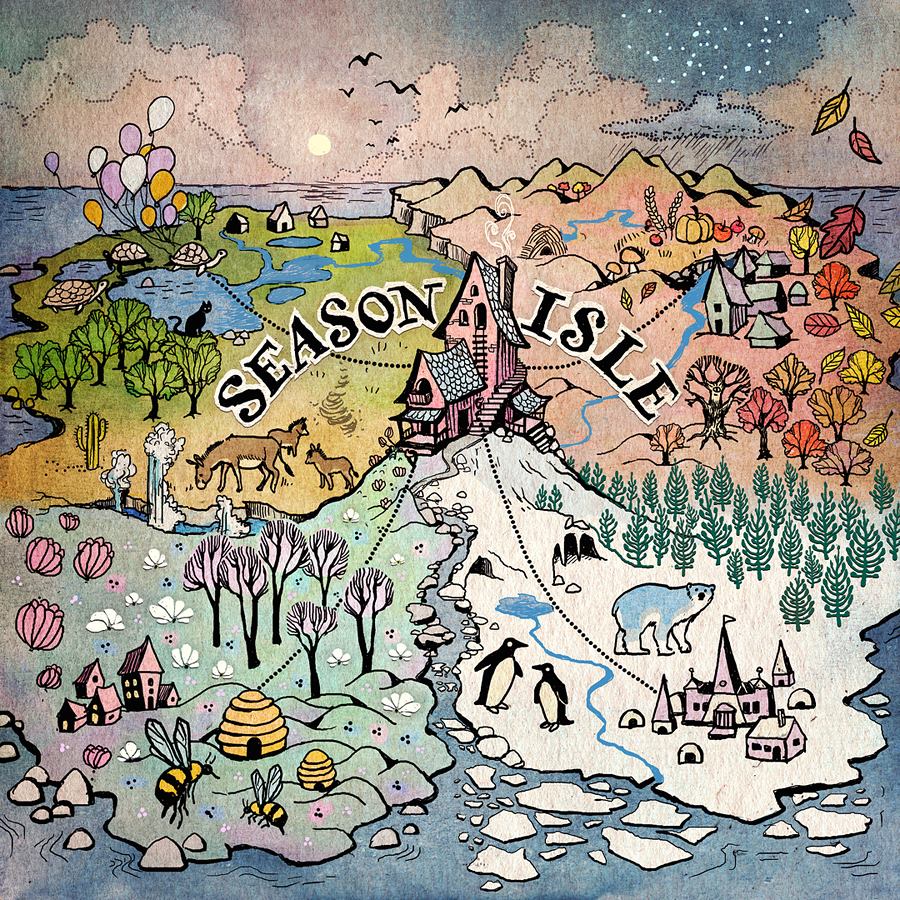
NR: In Season Isle, it’s really important to communicate location. Each of the four seasons have their own sound, and it was important to communicate which season we were in without relying on dialogue. 3D binaural allowed us to put people in places and keep them separate. With a non-visual medium as soon as you have more than three actors it gets tricky -- the binaural experience helps you locate them and keep the story straight.
JB: Sometimes, we’d have scenes with five or six characters, so we would set them up across the spectrum from each other, and you’d be able to tell who everyone was – largely by where they were located in space. Dolby makes a huge difference when panning – ‘placing’ is probably a better word for it. You can put a character in the upper right, another slightly behind you, three on your right talking to two on your left. The pinpointing of location of Dolby Atmos is so precise, I can make characters sound like they’re walking – you feel motion just from minute changes in location.
NR: It feels like you’re next to that person and in that space. It’s the complete opposite of an actor in sound booth who has been instructed to stay still on the mic.
JB: Nuances – direction of motion, where people were located with relation to other things – were important to the story. We actually had the director draw us a series of maps so that we could know if we were in ‘Spring’, ‘Winter’ is over there, and we’d have to fly left.
“Sometimes you don’t need to see it to feel it”
JB: Say a character is standing on a dam looking out over a wide valley. We want the listener to feel that expansive setting. I might start by taking something like a bird, putting it in the distance – small, and making it echo in a way that the listener’s mind automatically envisions the scope of the scene. There are archetype clues -- we have a sound language for things. Sometimes you don’t need to see it to feel it. Music helps, too – a good composer can be worth a lot in this space.
NR: When children learn, they develop associations between what they see and what they hear in the real world. Binaural tools let us use those associations to create imaginary audio worlds. We’re using the HRTF to give clues. Where am I standing? Is it a big place?
NR: They should be asking to come to the studios. Come to us for demos. They need to start hearing the format to find out where the boundaries are. The goal posts have moved, and you have to play with it to understand what can be done.
JB: “How can we use this to do what we have to do more effectively?” We are creating a bunch of new sound conventions, just by solving problems using these new tools. You can hear all the decisions that were made along the way. i.e. I’ve got three characters -- one’s hang gliding, and the others are on the ground. There are cool ways to solve that problem. Maybe you have a group of donkeys, one’s caught in a whirlwind hurricane, the others are watching from a cave. You could show that in 3D by placing the characters on the right in an echoey cave, then placing the whirlwind in the distance with a donkey on the left. Binaural allows us to keep these elements separate and make sense of it all from a spatial perspective.
“IMMERSIVE IS THE FUTURE”
JB: It’s definitely part of it.
NR: I would say immersive is the future and that we can scale it up and down. The future is scalability. I can listen with my whole family in Atmos or surround sound and later put on my headphones and have an immersive experience in different venues. The new TV format, “Next Gen TV” lists immersive audio as part of the spec. All of our TV mixes will be immersive in the future. It’s great to start early in the immersive formats so when you switch to “Next Gen TV”, you’re already rocking.
1 Feret, Q. “Binaural Audio: How 3D audio hacks your brain.” AR VR Journey, October 20, 2017.
2 Anatomy & Physiology, Connexions Web site. http://cnx.org/content/col11496/1.6/, June 19, 2013.
Hess, A. "The New Bedtime Story Is a Podcast." The New York Times. 3 Oct. 2017. <https://www.nytimes.com/2017/10/03/arts/kids-podcast-panoply-pinna.html>.
Dubway engineer and location recordist Zac Suskevich has been back on set rolling audio for the new season of Grave Mysteries, a Lion TV production on the broadcast network Investigation Discovery!
Grave Mysteries is a TV-Mini-Series in which police pursue baffling murder cases. To catch the killer, detectives must reconstruct the victim's life.
The show airs regularly on Investigation Discovery while full episodes can also be watched online.
A post shared by Dubway Studios (@dubwaystudios) on
We've recently worked with Atomic Entertainment to recording voice-over for a new series they are in production with – a live-action web series, to be shown on Netflix, surrounding topics of science, aimed for children in middle school.
Dubway Engineer Russell Castiglione worked with producer Matthew Leven via SourceConnect, to record voice-overs from actors in our studio, for the pilot episode of the new series.
Spotify, Genius
Dubway engineer Russell Castiglione was recently in studio with Stereo Williams, recording overdubs for a new podcast by Spotify and Genius.
On March 28, 2018, music streaming platform Spotify and lyric interpretation website Genius (f.k.a. Rap Genius) announced the premiere of an all-new podcast, Déjà Vu, that celebrates the complex musical lineage of today’s biggest artists by exploring the greats who inspired them.
On Déjà Vu, host and cultural commentator Stereo Williams leads a panel of music experts in an in-depth discussion about the ways that modern hitmakers connect to the iconic musicians from the past who paved the way. Each episode will examine the music of a modern day superstar, and uncover the rich history hiding beneath the surface of their sound.
Every other Wednesday, new episodes of Déjà Vu will air for a run of eight episodes. You can now listen to the first one, featuring Rob Markman (Genius' Head of Artist Relations) and Dawton Thomas (Editor-in-Chief of VIBE), here: Episode 1: Is Kendrick Lamar the new 2Pac?
We are very delighted to share the news that Rhumba-produced children's podcast, Season Isle and Remy's Place have been given recognition by the highly-acclaimed Parents' Choice Awards!
Season Isle has been awarded a Parents' Choice Silver Honor Award (Category: Audio, Subcategory: Storytelling); and Remy's Place has been awarded a Parents' Choice Recommended Award (Category: Audio, Subcategory: Music).
John Angier, who has composed music for over 30 television series including The Teenage Mutant Ninja Turtles, Yugioh, Bubble Guppies, Speed Racer The Next Generation, and Sonic X composed a highly orchestrated score for Season Isle, while Mike Rubin/Richard Julian has a star studded crew of musicians (including Norah Jones) for the live-band based, Rhumba production of Remy's Place.
The two podcasts can be found and heard exclusively on Panoply's children's podcast division, Pinna Audio.
Congratulations to everyone involved on all the hard work and creative energy put into these shows!